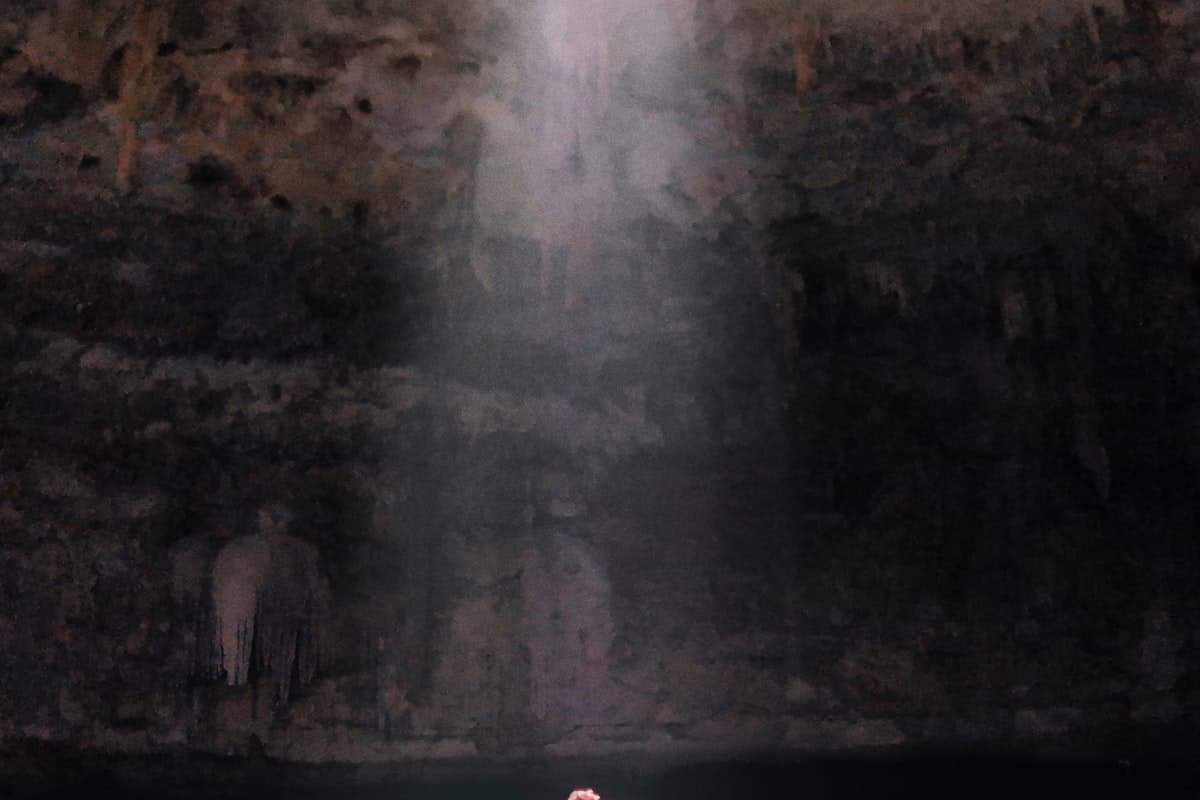
Cenote Mil Columnas, meaning Thousand Columns, is one of the best-kept secrets in the Riviera Maya cenote scene. Located near the Dos Ojos complex about 55 kilometers south of Playa del Carmen, this underground cave cenote rewards adventurous visitors with extraordinary stalactite formations, a historical Mayan altar, and a level of tranquility that the more famous cenotes cannot match.
The cenote was discovered approximately 40 years ago and still retains an off-the-beaten-path feel. There are no signs from the highway — you enter through the Dos Ojos park gate and follow a dirt road to its end. This natural filtering keeps casual tourists away and preserves the intimate atmosphere that makes Mil Columnas special.
Inside, the cave system features an impressive array of stalactite and stalagmite formations, many of which have merged into massive columns that give the cenote its name. The formations are illuminated by strategically placed lights that reveal their full beauty. A Mayan altar deep inside the cave is a reminder that these underground spaces held profound spiritual significance for the Maya civilization.
The cenote has both walking passages through shallow caves and deeper pools for swimming and snorkeling. The water is crystal-clear and maintains a constant cool temperature year-round. Life jackets are included with your entry fee. Snorkeling gear can be brought but is not always available for rent.
A unique addition at Mil Columnas is the option for horseback riding through the jungle surrounding the cenote. This is not available at most cenote sites and adds a memorable dimension to the visit.
Entry costs 350 MXN (approximately $19 USD) per person. Facilities are basic — this is a natural site without a restaurant or gift shop. Bring your own water and snacks, and carry cash as cards are not accepted.
Cenote Mil Columnas is best for travelers who have already visited the popular cenotes and are looking for something more authentic and less crowded. It pairs naturally with a visit to Cenote Dos Ojos, which is in the same area.